The Palestinian Waving Flag in Creative Work
Few symbols carry the weight and immediacy of a flag that appears to move. The Palestinian Waving Flag is more than a static emblem; it is a visual representation of identity, resilience, and connection. In creative work, this dynamic imagery offers a unique opportunity to communicate deeply without a single word. Whether you are a designer, marketer, educator, or small business owner, understanding how to use this symbol with intention can elevate your projects from ordinary to meaningful.
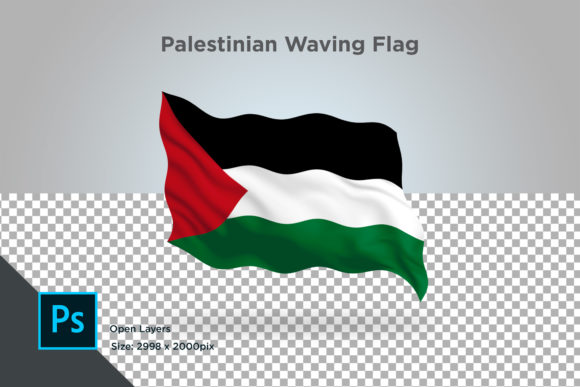
The appeal lies in the interplay of movement and stillness. A waving flag suggests life, wind, and the passage of time — it is not just a piece of cloth but a story in motion. The traditional colors of black, white, green, and red, arranged in horizontal stripes with a central triangle, become more vivid when they seem to ripple. This combination of geometry and organic flow makes it a versatile element for many creative contexts.
Understanding the Visual Language
Before applying the Palestinian Waving Flag to any project, it is important to appreciate its core components. The flag’s design is deceptively simple: three equal horizontal bands (black, white, and green) with a red triangle at the hoist. When rendered in motion — as in a waving animation, photograph, or illustration — each color interacts with light and shadow, creating depth and energy.
For creators, this means you have a built-in palette that works across both digital and print. The contrast between the dark black and vibrant green, bridged by white and accented by red, ensures high visibility. Designers can use these colors as a primary scheme or as accents within a larger layout. The waving effect adds a layer of texture that static flags lack, making it ideal for backgrounds, hero images, or even subtle patterns.
Photographers and videographers often capture the flag in the wind to convey a sense of place and emotion. For a digital creator, a high-resolution still of a waving flag can be the centerpiece of a website banner or a poster. The key is to preserve the integrity of the design — do not distort proportions or alter the color sequence arbitrarily. Authenticity strengthens the message.
Creative Applications Across Media
The versatility of the Palestinian Waving Flag allows it to be adapted for numerous formats. Here are several practical ways different creative professionals can integrate it into their work.
Digital Design and Branding
For web designers and brand strategists, the waving flag can serve as a powerful visual anchor. Consider using a subtle, looping animation of the flag on a landing page to establish a cultural or political context. A travel blog focusing on Palestinian heritage might feature a waving flag header that immediately signals the theme. The motion draws the eye without requiring text.
Entrepreneurs creating merchandise like tote bags, mugs, or phone cases can use a stylized version of the waving flag. Instead of a literal photograph, try a vector illustration where the flag waves in a simplified, abstract way. This keeps the design clean and reproducible across different materials. Small business owners selling art prints or digital downloads can offer variations — minimalist line art of a waving flag, watercolor interpretations, or geometric patterns inspired by the flag’s colors.
Marketers should be mindful of scale. On social media profile images, a full waving flag may become too detailed. Instead, crop into a detail — perhaps just the red triangle with a hint of green and white — and add a soft wave effect. This maintains recognizability while fitting the small square format.
Educational and Editorial Content
Educators and publishers produce materials that explain history, culture, or current events. An article about Palestinian identity can be enhanced with a carefully placed image of the flag. But avoid cliché: instead of always using a standard stock photo, commission or create an original piece. An illustration of the flag waving over a landscape, or a diagram breaking down the flag’s symbolism alongside the waving image, adds depth.
Bloggers writing about solidarity or cultural appreciation can use the waving flag as a visual punctuation. For a post about traditional Palestinian embroidery (tatreez), a muted background featuring a faintly waving flag can tie the visual theme together without overwhelming the text. The key is to ensure the flag supports the narrative, not dominates it.
Freelancers designing presentations for conferences or workshops might use a video loop of the flag as a transition slide. It creates a moment of reflection for the audience. Because the audience is often diverse, context matters. Provide a caption or brief oral explanation to avoid confusion and show respect for the symbol’s meaning.
Video and Motion Graphics
Motion designers and video editors have the most direct relationship with the waving flag. A high-quality video of a Palestinian flag waving in the wind can be used as a backdrop for text overlays, opening credits, or as a standalone visual. When used as a lower-third background, blur and fade the flag to ensure readability.
For YouTube creators or documentary filmmakers, a time-lapse of a flag waving against a changing sky can symbolize endurance. Alternatively, create a looping animated GIF for use in email newsletters or social media posts. The loop should be seamless — no abrupt start or stop. Many design tools now allow you to generate this effect from a still image using AI or scripted animation, saving time while maintaining quality.
One approach is to combine the waving flag with other elements: a silhouette of a person standing in front, a map overlay, or a quote from a poet. This layers meaning and prevents the flag from feeling like a filler image. Remember that motion can draw attention away from text; use it strategically.
Adapting for Different Audiences and Platforms
Not every audience will respond the same way to the Palestinian Waving Flag. A community of diaspora youth may appreciate a vibrant, modern take — think neon stylization or pixel art of the flag animated to wave. An academic audience might prefer a more restrained, documentary style with a clear caption. A general marketing audience (e.g., for a food brand that uses Palestinian flavors) might use the flag’s colors in a subtle pattern, like a wavy line across a package, rather than the full flag.
On Instagram, a reel that transitions from a still flag to a waving one using an animation effect can be very engaging. For LinkedIn, a profile background image of a waving flag with a simple overlay stating your affiliation works best. On a blog or portfolio site, consider an interactive element where the flag moves when the user scrolls or hovers — this feels responsive and modern.
Always test your design across devices. A waving flag animation might look fluid on a desktop but can be laggy on a mobile browser. Optimize file sizes, use CSS animations where possible, and provide static fallbacks. Accessibility matters too: if the flag is used as a background, ensure sufficient contrast for any text placed over it.
Practical Tips for Clear and Effective Results
Using a symbol like the Palestinian Waving Flag requires both creativity and responsibility. Keep these guidelines in mind to ensure your work is both impactful and respectful.
- Accuracy first: Always use the correct color values (hex or CMYK) for the flag. A quick online search provides official specifications. Avoid recoloring or desaturating without a deliberate artistic reason.
- Resolution matters: If you use a photograph or video, ensure it is high resolution. Pixelated flags appear amateurish and can be distracting. For vectors, use software that supports smooth curves, especially for the wave effect.
- Context is everything: Place the flag where it makes sense. Randomly inserting it confuses viewers. Align it with your content’s theme — if you are writing about Palestinian cuisine, the flag can appear on a restaurant menu design, not just as a generic clip art.
- Movement should be subtle: Overly fast or exaggerated waving can look cartoonish. A gentle, natural wave inspired by real wind is more pleasing and allows the design to breathe.
- Respect the symbol: Understand that for many people, this flag represents identity and history. Treat it with care — do not use it in a trivial, commercialized way without purpose. If your project might be seen by a sensitive audience, include a brief note of intent if necessary.
Staying Original and Audience-Friendly
The most successful uses of the Palestinian Waving Flag come from creators who balance inspiration with practicality. Do not copy what others have done; instead, ask what unique story you want to tell. A designer creating a series of posters for Human Rights Day might use a minimalist waving flag with a single geometric fold — this is distinct from a documentary filmmaker using a sweeping drone shot of a flag on a hill.
Keep your audience’s perspective central. A younger audience on TikTok may respond to a fast-cut edit where the flag waves over a beat of music. A small business owner selling handmade crafts might place a small waving flag icon on product tags to signal heritage. Testing different versions with a small group before full launch can reveal what resonates.
Organization also matters. If the flag is part of a larger set (e.g., flags of the world), maintain consistency in how you animate each one. Use the same camera angle, lighting, and wave speed. This makes the final collection look professional and intentional.
Ultimately, the Palestinian Waving Flag is a tool in your creative toolkit — one that carries inherent meaning and visual appeal. Used thoughtfully, it can help you connect with audiences, reinforce messages, and produce work that stands out. Focus on clarity, authenticity, and respect, and your projects will speak for themselves.