The Belarus Waving Flag: Symbolism, History, and Modern Meaning
Few national symbols carry as much layered meaning as the Belarus waving flag. Whether you have seen it fluttering at diplomatic events, displayed during cultural festivals, or used as a digital emblem in online discussions, the flag of Belarus tells a story of identity, resilience, and transformation. For many observers, the flag is simply a striking combination of red and green with a distinctive ornamental pattern. Yet understanding what the Belarus waving flag truly represents requires a deeper look into the nation's past, its political evolution, and the role such symbols play in contemporary life.
This article explores the Belarus waving flag from the ground up. We will examine its design elements, trace its historical origins, clarify common misconceptions, and consider how this emblem functions in modern contexts including business, education, technology, and daily civic life. By the end, you will have a clear and rounded understanding of why this flag matters and what it communicates both within Belarus and on the world stage.
The Design of the Belarus Flag: More Than Meets the Eye
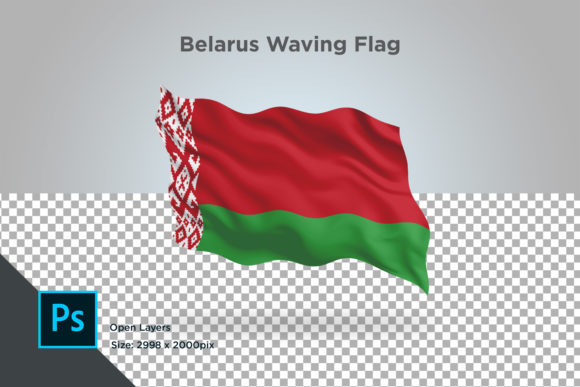
At first glance, the national flag of Belarus presents a simple horizontal bicolor: a wide red stripe at the top, a wide green stripe at the bottom, and a vertical white-and-red ornamental pattern running along the hoist side. But every element of this design carries intentional meaning.
Colors and Their Significance
The red stripe is a powerful reference to Belarusian history. It recalls the blood shed in defense of the homeland, particularly during the struggles of World War II when Belarus suffered devastating losses. Red also connects to the country's medieval heritage, appearing on coats of arms and banners used by the Grand Duchy of Lithuania, of which Belarusian lands were a key part.
The green stripe symbolizes hope, renewal, and the natural wealth of Belarus. With vast forests, sprawling fields, and a deep agricultural tradition, green represents both the physical landscape and the promise of a vibrant future. Together, red and green create a visual balance between memory and aspiration.
The Ornamental Pattern
The vertical band on the hoist side features a traditional Belarusian ornamental pattern known as a "rushnik" or embroidered cloth design. This pattern, typically in red on a white background, incorporates geometric motifs including diamonds, crosses, and stylized plant forms. These motifs date back centuries and appear on folk costumes, household linens, and ceremonial items. By placing this ornament on the national flag, Belarus anchors its modern identity in enduring cultural traditions.
Interestingly, the pattern used on the official flag is not arbitrary. It derives from a specific design created by Matrona Markevich in 1917, which later became widely recognized as a national emblem. The ornament thus connects the flag to early twentieth-century movements for Belarusian cultural revival.
A Brief History of the Belarus Flag
To understand the Belarus waving flag as it exists today, it helps to know how the country's national symbols have evolved over time. This history is not merely academic; it informs present-day discussions about identity and patriotism.
Early Flags and the Soviet Era
Before 1917, Belarusian lands did not have a single universally recognized national flag. Various principalities and regional entities used their own banners. The modern concept of a Belarusian flag emerged during the short-lived Belarusian People's Republic (1918–1919), which employed a white-red-white horizontal tricolor. This design later became associated with the Belarusian diaspora and, after 1991, with pro-democracy movements.
During the Soviet period (1919–1991), the flag of the Byelorussian Soviet Socialist Republic underwent several changes. The final Soviet-era version featured a red field with a gold hammer and sickle, a gold star, and a vertical red-on-white ornamental stripe along the hoist. This design is the direct ancestor of today's flag.
The 1995 Referendum and Current Flag
After Belarus gained independence in 1991, the white-red-white flag was briefly used as the national flag. However, in 1995 a controversial referendum proposed adopting a flag closely resembling the Soviet-era design but with modifications. The proposal passed, and the current flag—red and green with the ornamental pattern—became the official national flag of the Republic of Belarus.
This decision remains a point of debate. For some citizens, the flag represents continuity, stability, and the legacy of victory in World War II. For others, the white-red-white flag holds deeper historical and national significance. Understanding both perspectives is essential for anyone seeking a complete picture.
Common Misunderstandings About the Belarus Waving Flag
Given the flag's contested history, several misconceptions circulate among casual observers. Let us clarify a few of the most frequent ones.
- Misunderstanding 1: The current flag is identical to the Soviet flag. In reality, the Soviet-era flag of Belarus included a hammer and sickle and a gold star, while the current flag removes those symbols. The ornamental pattern also differs slightly in its proportions.
- Misunderstanding 2: The ornamental pattern is purely decorative. As discussed, the pattern carries deep cultural meaning and connects the flag to folk traditions and national identity.
- Misunderstanding 3: The flag's colors have no official meaning. The government has provided clear interpretations for red (courage and sacrifice) and green (hope and nature), though unofficial interpretations also exist.
- Misunderstanding 4: Only one flag represents Belarus. In practice, both the current official flag and the white-red-white flag are used by different groups within Belarus and the diaspora, each carrying distinct political and cultural connotations.
The Belarus Waving Flag in Modern Life
Flags are not static historical artifacts. They live in the present, appearing in settings as varied as government buildings, classrooms, sports arenas, and digital platforms. The Belarus waving flag is no exception, and its presence in modern contexts reveals much about how national identity operates today.
Government and Official Ceremonies
In state settings, the Belarus flag is displayed prominently. It flies over government buildings, appears at diplomatic meetings, and is used during national holidays such as Independence Day (July 3) and Flag Day (second Sunday in May). For the government, the flag symbolizes sovereignty, unity, and the country's official path.
Education and Civic Learning
Belarusian schools teach students about the flag's symbolism and proper display etiquette. Children learn to respect the flag as a representation of their country. This educational role is common worldwide, but in Belarus it carries additional weight given the flag's contested meanings. Teachers often emphasize the official narrative while also acknowledging broader historical context in more nuanced discussions.
Business and Branding
Companies operating in Belarus or exporting Belarusian products sometimes incorporate flag colors or motifs into their branding. This can signal national pride, origin, or quality associated with Belarus. For international businesses, understanding the flag's symbolism helps avoid missteps in marketing or corporate communication.
Digital and Online Spaces
In the age of social media, the Belarus waving flag appears in profile pictures, emoji form (🇧🇾), and digital banners. Activists, journalists, and ordinary citizens use the flag to express solidarity, protest, or celebration. However, the choice between the official flag and the white-red-white flag often signals political alignment. Observing which flag appears in a given online context can provide clues about the user's perspective.
Practical Relevance: Why the Flag Matters Beyond Belarus
You might wonder why someone outside Belarus should care about the nuances of its national flag. There are several practical reasons.
- Global awareness and media literacy. International news stories about Belarus often include images of the flag. Understanding its symbolism helps you interpret coverage more accurately.
- Travel and cultural exchange. If you visit Belarus, work with Belarusian colleagues, or host Belarusian guests, recognizing the flag's significance demonstrates cultural sensitivity.
- Business and diplomacy. Companies and organizations engaging with Belarus benefit from understanding local symbols and their meanings.
- Academic and personal interest. Flags are windows into national psychology. The Belarus flag's complex story offers lessons about identity, memory, and the politics of symbols that apply far beyond one country.
How to Identify and Use the Flag Correctly
Whether you encounter the Belarus waving flag in a photograph, a video, or an actual physical display, here are key details to note.
- The red stripe is on top, the green stripe on the bottom.
- The ornamental band sits on the left side (the hoist side) from the viewer's perspective.
- The ornament features red geometric patterns on a white background.
- The flag's proportions are typically 2:3.
If you are using the flag in a presentation, publication, or digital project, ensure you source an accurate image. Many online repositories include outdated or incorrect versions. When in doubt, consult official government sources or reputable reference sites.
Broader Reflections: What the Belarus Flag Teaches Us
The Belarus waving flag is more than a piece of cloth or a digital icon. It is a repository of history, a marker of identity, and a living symbol that evolves with the nation. Studying it reveals how countries negotiate their past and present, how symbols can unite or divide, and how ordinary people engage with national emblems in their daily lives.
For the general reader, the key takeaway is this: flags are never neutral. They carry stories, emotions, and politics. By learning to read a flag like Belarus's with care and context, you sharpen your ability to understand not just one country, but the broader human practice of symbol-making.
Conclusion
The Belarus waving flag, with its bold red and green bands and intricate ornamental stripe, is a symbol shaped by history and alive in the present. Its design reflects sacrifice, hope, and cultural continuity. Its history reveals a nation's journey through empire, war, independence, and political change. Its modern uses span government, education, business, and digital life. Common misunderstandings—such as confusing it with the Soviet flag or dismissing the ornament as mere decoration—can be resolved with a little knowledge.
Whether you encounter the flag in a news report, at a cultural event, or in an online conversation, you now have the context to understand what it represents and why it matters. Symbols only have meaning when people understand them. By taking the time to learn about the Belarus flag, you participate in the ongoing story of how nations express themselves to the world.