Layered Paper Cut Mandala: Depth, Precision, and Creative Potential
Paper cutting is an ancient craft, but the layered paper cut mandala represents a modern evolution that combines precision cutting with dimensional composition. Unlike flat paper cuts, these works stack multiple individually cut sheets to create shadow, depth, and visual complexity that shifts with lighting and viewing angle. For designers, crafters, and creators looking to expand their visual language, this technique offers a structured yet expressive medium worth examining closely.
What Makes a Layered Paper Cut Mandala Distinct
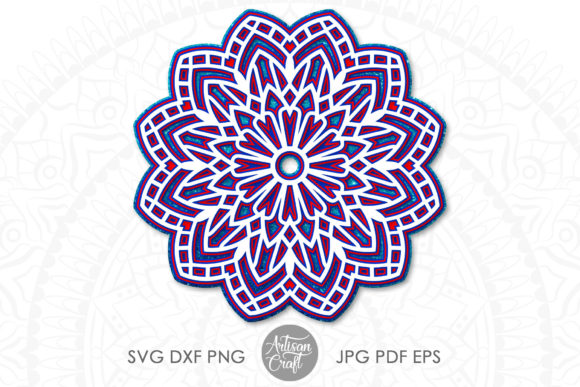
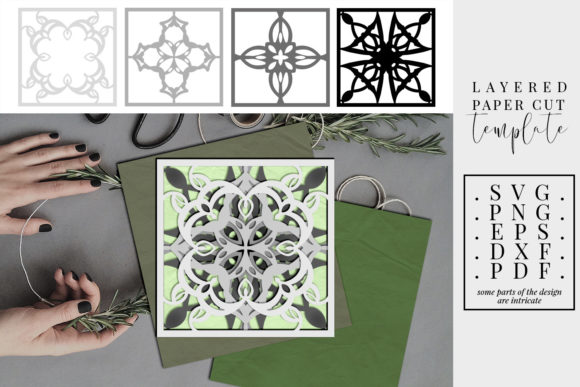
At its core, a layered paper cut mandala uses two or more sheets of paper, each cut with concentric or complementary pattern segments, stacked with spacers or direct layering to produce a three-dimensional effect. The mandala structure itself—radially symmetrical, often geometric—provides a natural framework for layering because repeating elements can be distributed across separate planes. This allows the eye to travel through the composition, picking up details that would be lost in a single flat cut.
The purpose is not merely decorative. The technique solves a limitation of single-layer paper cutting: when all cuts exist on one plane, fine details can visually blend or appear cluttered. By separating elements into layers, the artist controls which parts of the design catch light, cast shadow, or recede into the background. The result is a piece that reads clearly from a distance while rewarding close inspection.
This approach also changes how the work interacts with its environment. Natural or artificial light passing through the gaps between layers creates shifting shadows throughout the day. A layered paper cut mandala on a wall can look different in morning light versus evening, which gives it a living quality that static art lacks.
Key Characteristics and Practical Strengths
Several traits define a well-executed layered paper cut mandala and contribute to its usefulness across different applications.
- Depth registration. Each layer must align precisely with the others, especially near the center where symmetry is critical. Even a slight offset of one millimeter can break the visual flow. High-quality pieces maintain tight registration through careful cutting and mounting.
- Gap consistency. The spaces between layers determine how shadows form. Too little gap and the layers blur together; too much and the piece loses cohesion. Professional work uses consistent spacer thickness—often foam tape or layered cardstock—to achieve a predictable shadow width.
- Material selection. Paper weight and color matter significantly. Lighter papers allow backlighting to pass through, while heavier stocks produce sharper shadows. Many creators use black or white paper for dramatic contrast, but colored or metallic papers add another dimension when layered together.
- Pattern density. A layered mandala can carry intricate detail because the visual load is distributed. One layer might hold fine geometric lines while another carries bold floral motifs. This density management allows complexity without confusion.
These characteristics translate directly into practical value. A layered paper cut mandala can serve as a focal point in interior design, a branding element for a creative business, or a product category for artists selling physical or digital files. The format is inherently shareable on social media because its depth photographs well under directional light, and the cutting process itself is visually satisfying to document.
Real-World Performance and Use Cases
In practice, the layered paper cut mandala performs best when the creator has a clear plan for the final piece. Spontaneous cutting rarely works well with multi-layer designs because each layer must serve a specific role—background, mid-ground, foreground, or top accent. Planning the layer order in advance, often using digital tools like vector software, is standard among experienced makers.
Consider a designer creating a series of mandala wall art for a boutique hotel. Each piece needs to read as cohesive from across the room while offering detail up close. A single-layer cut would either be too simple to hold attention or too busy to read clearly. A three-layer mandala, with the largest forms in the back and the finest details in the front, solves both problems. The hotel guests see a strong silhouette from a distance and discover hidden patterns as they approach.
For digital product sellers, layered paper cut mandala files are popular items on craft marketplaces. SVG and PDF cutting file formats allow buyers to cut their own versions using hobby cutters. The key to reliable digital files is testing the layer alignment thoroughly. Files that require manual adjustment frustrate users and generate returns, while well-tested files build repeat customers.
In educational settings, the layered mandala teaches principles of symmetry, spatial reasoning, and color theory. Art educators use it to demonstrate how form and negative space interact. Because the cutting is repetitive and meditative, some therapists also incorporate simplified versions into mindfulness workshops. The repetitive cutting motion combined with the required focus on pattern creates a flow state similar to adult coloring books, but with a tangible result.
Quality, Usability, and Consistency
Evaluating a layered paper cut mandala—or a product line based on them—requires attention to several quality markers.
Cut precision is the most obvious indicator. Whether cut by hand with a craft knife or by machine with a laser or blade cutter, the edges should be clean and free of tears, fuzz, or incomplete cuts. Hand-cut pieces show subtle variation that some buyers value as evidence of craftsmanship, while machine-cut pieces offer repeatability essential for production work.
Layer mount matters for longevity. Adhesive spacers that dry out or lose grip over time will cause layers to sag or detach. High-quality pieces use archival adhesives, and the mounting substrate—often a shadow box frame or a rigid backboard—should be acid-free to prevent paper yellowing.
Design intention distinguishes thoughtful work from purely decorative output. A strong layered mandala has a clear focal point, usually at the center, with each layer supporting that focus. Patterns that are applied randomly across layers, or layers that duplicate the same pattern at different scales without coordination, weaken the overall effect. The best pieces show intentional distribution of visual weight.
Consistency is critical when producing multiple pieces. A creator selling a series of layered paper cut mandala designs needs each to feel like part of the same family. This means consistent layer count, similar gap depth, and a coherent style across the series. Buyers who purchase two pieces for a room expect them to harmonize without effort.
Who Benefits Most and When
The layered paper cut mandala appeals to several distinct audiences, each using it for different purposes.
Interior designers and stylists use these pieces as statement art that fills wall space without overwhelming a room. The dimensional quality works well in minimalist interiors where texture and shadow carry more weight than color. Large-format layered mandalas, often 24 inches or wider, become natural conversation pieces in entryways or above furniture.
Paper craft enthusiasts and hobby cutters appreciate the technique as a skill-building project. Moving from single-layer designs to multi-layer work teaches pattern planning, precise cutting, and mounting techniques. Many hobbyists start with ready-made layered paper cut mandala templates and later develop original designs as their confidence grows.
Digital sellers and pattern designers can build a product line around layered mandala files. The format works well for both SVG cutting files and printable PDF patterns for hand cutting. Because the designs are time-consuming to create from scratch, a well-developed collection can become a steady revenue stream with minimal ongoing maintenance.
Educators and workshop facilitators use simplified versions to teach geometry, cultural art history, and fine motor skills. The mandala form appears across multiple traditions, including Hindu, Buddhist, and Celtic art, so the project naturally invites cross-cultural discussion. For younger learners, reducing the number of layers to two and using pre-cut blanks makes the activity accessible.
That said, the layered paper cut mandala is not ideal for every situation. For quick decoration needs or disposable event decor, the time investment is difficult to justify. A single multi-layer piece can take several hours to design, cut, and assemble. Similarly, outdoor use is impractical because paper degrades quickly in sunlight and moisture. And for creators who prefer loose, organic forms, the exacting symmetry of the mandala structure may feel restrictive.
Flexibility and Long-Term Value
One of the strongest arguments for exploring layered paper cut mandala as a creative asset is its adaptability. The technique does not lock you into a single aesthetic. By changing paper color, layer depth, pattern style, or scale, the same basic approach can produce minimalist, ornate, modern, or traditional results.
For example, a designer working with a luxury brand may create a white-on-white mandala with shallow layers for a subtle, sophisticated look. A street artist might use neon papers and deep gaps for a high-contrast, bold piece. The underlying method is the same, but the output responds entirely to material and design decisions.
Long-term value also appears in reuse. Digital cutting files can be sold indefinitely, and physical templates can be reused across multiple pieces. A creator who develops a library of layered paper cut mandala patterns can build a business around that library without constantly creating new work from scratch. Updates and variations extend the lifecycle further.
From a collector perspective, hand-cut layered mandalas hold value because they are labor-intensive and unique. Limited runs, signed pieces, or commissioned custom designs can command higher prices than flat prints. The dimensional format is difficult to reproduce photographically, so owning the physical piece retains an exclusivity that digital art often lacks.
Practical Recommendations for Getting Started
If you are considering working with layered paper cut mandala, either as a creator or as a buyer, a few practical points will improve your experience.
Start with three layers. Two layers can look flat, and four or more introduce alignment complexity that can frustrate beginners. Three layers—background, mid-ground, and foreground—provide enough depth to show the technique without overwhelming the process.
Choose paper that holds crisp edges. Lightweight cardstock in the 65–100 lb range works well for both hand and machine cutting. Avoid standard printer paper, which tears easily, and skip papers with high texture, which obscure fine cuts.
Use a mounting system that allows gap adjustment. Foam tape squares in 1/16 or 1/8 inch thickness are widely available and easy to apply. Test the gap on a small sample before committing to a full piece—different paper colors and lighting conditions change how the gap reads visually.
For digital sellers, include a test cut file with each purchase. A small practice mandala using the same settings helps buyers calibrate their cutting machine before attempting the full design. This reduces support requests and increases satisfaction.
Consider framing with a shadow box. Standard frames that press glass against the paper will crush the layers. Shadow boxes provide the necessary depth and also protect the paper from dust and handling. Many framers offer shadow box options, or you can build one with a deep-set frame and a custom mat.
The layered paper cut mandala is neither a quick project nor a one-dimensional trend. It is a deliberate craft that rewards patience, planning, and precision. For anyone working in design, education, or creative production, it offers a reliable method for producing work that has presence, depth, and lasting appeal.