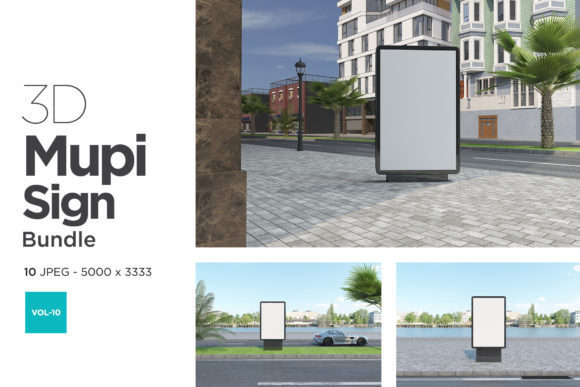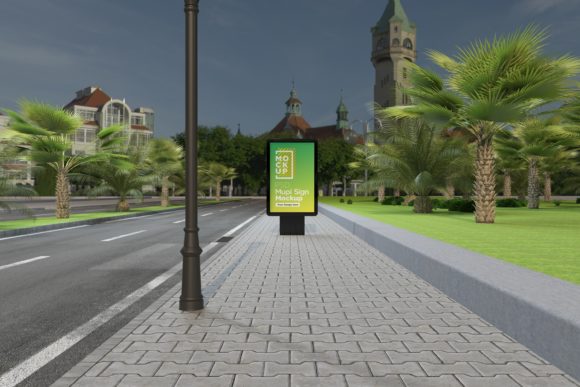
How Mupi Night View City Signage Mockup Transforms Urban Branding Strategies
Urban advertising is undergoing a quiet revolution. As cities grow more competitive for consumer attention, brands are looking for new ways to test their visual communication before committing to expensive campaigns. In this context, the Mupi Night View City Signage Mockup has emerged as an essential tool for marketers, designers, and entrepreneurs who need to visualize how their signage will perform in real-world night environments. The mockup is more than a simple template—it’s a strategic asset that helps professionals make better decisions about scale, readability, and brand presence in low-light urban settings.
What makes this particular mockup stand out is its focus on the intersection of architecture, lighting, and digital design. By placing signage in a realistic nocturnal cityscape, users can assess contrast, color temperature, and legibility under conditions that are often overlooked during daytime-focused design processes. In an era where cities never sleep, understanding how a sign communicates after dark is no longer optional—it’s a competitive advantage.
What Exactly Is the Mupi Night View City Signage Mockup?
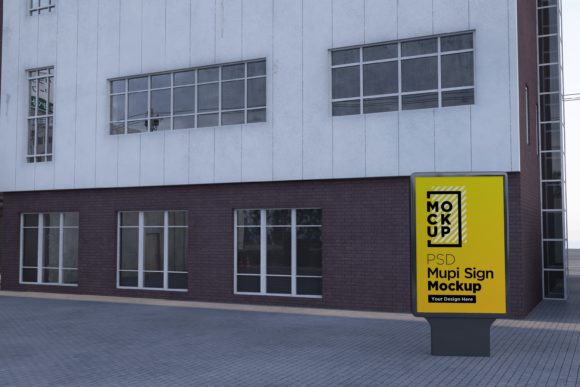
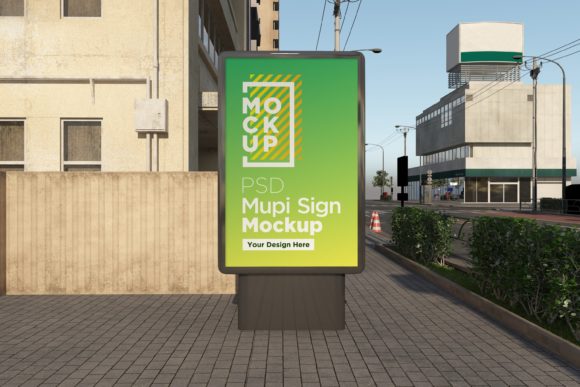
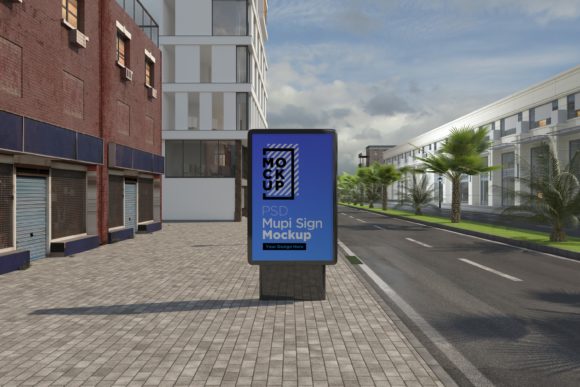
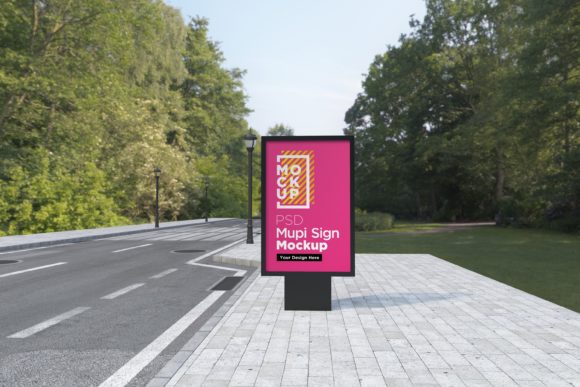
The Mupi Night View City Signage Mockup is a high-resolution, layered graphic file—typically a PSD or smart object template—that allows users to insert their own designs into a realistic night-time city scene. The term “Mupi” refers to large-format urban advertising panels, commonly seen in bus shelters, metro stations, and street furniture. The mockup simulates how such panels look when illuminated against the dark sky, surrounded by street lamps, neon signs, and ambient city glow.
Unlike generic mockups, this version emphasizes environmental accuracy. Reflections, shadows, and light leaks are carefully calibrated to mimic the behavior of backlit and front-lit signage in night conditions. Users can adjust brightness levels, apply color overlays, and test different materials—matte, gloss, or translucent—to see how their design reacts to simulated city lighting. It is particularly useful for testing typography hierarchy, logo visibility, and accent colors under dim or mixed lighting.
For creative professionals, the mockup serves as a bridge between a flat design file and a realistic urban installation. It eliminates guesswork by showing how a sign might look through a car window, from a pedestrian viewpoint, or across a busy intersection. This level of detail is why it has gained traction among branding agencies, freelance designers, and marketing teams that value precision in communication.
Why Night Signage Matters in Saturated Markets
Daytime signage design is relatively straightforward: natural light is abundant, and contrast can be achieved through bold colors and large type. Nighttime introduces variables that change the game. Glare from streetlights, color distortion from mercury vapor lamps, and the risk of being lost among competing neon signs all affect how a brand is perceived after sundown.
The Mupi Night View City Signage Mockup directly addresses these challenges. It allows professionals to test how their signage handles the “night color shift” where cool white LED light can make warm colors look muddy, or where blue text may become invisible against a dark background. This is not a niche concern. According to recent urban branding studies, over 40% of outdoor advertising impressions occur during evening and night hours in metropolitan areas with heavy foot traffic and extended commercial activity.
Moreover, night signage is a subtle signal of brand permanence. A well-lit, visible sign at night suggests that a business is open, active, and trustworthy. In contrast, poorly lit or illegible signage can convey neglect or closure. The mockup helps designers avoid these negative associations by providing a realistic preview of how the signage will perform across different times and viewing distances.
Blending Technology, Design, and Urban Planning
The relevance of the Mupi Night View City Signage Mockup extends beyond graphic design software. It sits at the intersection of several trends: adaptive lighting technology, smart city initiatives, and the growing importance of experiential branding. As cities become more connected, signage is no longer static—it responds to time of day, weather, and even pedestrian density. Mockups that can simulate night conditions are the first step in planning adaptive signage strategies.
Designers using this mockup can experiment with dynamic brightness levels, gradient backgrounds that change from twilight to deep night, and even simulate how the sign would look under different types of street lighting—sodium vapor, LED, or incandescent. This kind of experimentation would be costly to reproduce with physical prototypes, but in a digital mockup, it becomes a routine part of the creative workflow.
From a business perspective, this capability translates into faster iteration cycles and lower revision costs. Entrepreneurs and marketing teams can present stakeholders with visualizations that accurately reflect real-world conditions, reducing the number of last-minute changes after installation. The mockup thus becomes a project management tool as much as a design tool, helping teams align expectations before production begins.
Practical Examples: From Coffee Shops to Tech Brands
Consider a boutique coffee chain planning to expand into a new downtown district. The storefront sign needs to convey warmth and quality during the day, but at night, the same sign must attract late-evening customers walking home from transit hubs. Using the Mupi Night View City Signage Mockup, the design team tests three variations: a cream-colored backlit panel, a dark green acrylic sign with white reversed text, and a minimalist metallic option with edge lighting.
The mockup reveals that the cream panel, while elegant in daylight, appears washed out under the orange glow of street lamps. The green acrylic sign, conversely, absorbs too much light and becomes nearly invisible from across the street. Only the metallic edge-lit sign retains its legibility and color warmth during the simulated night scene. The team makes a data-informed decision that saves thousands of dollars in reprints and installation delays.
For a technology brand launching a new product line, the mockup might be used to test how their logo works when illuminated on a large Mupi panel near a bus terminal. The brand’s signature gradient might look vibrant on screen but appear as a single dark mass in the night mockup. Adjusting the gradient to increase contrast between adjacent colors ensures that the logo remains recognizable even when viewed quickly from a distance.
These examples show how the mockup is not about aesthetics alone. It is about reducing risk, improving readability, and ensuring that the brand message is delivered consistently regardless of the time of day.
Shifting Workflows and New Expectations
The rise of remote collaboration and cloud-based design tools has changed how mockups are shared and reviewed. The Mupi Night View City Signage Mockup is increasingly used in design sprints where team members across different time zones need to evaluate a campaign’s outdoor assets. Night-view simulations allow colleagues in sunny regions to understand the challenges faced by teams in northern latitudes where winter nights are long.
Clients, too, have grown more sophisticated. They expect to see how their investment will look in context, not just on a white background. A mockup that includes realistic night lighting, traffic bokeh, and wet street reflections does more than impress—it provides a reference point for approval. This aligns with a larger trend in creative industries where stakeholders demand “proof of concept” before committing to production runs.
Furthermore, the mockup supports accessibility considerations. Poor night contrast is not just a branding problem—it can be a safety issue for pedestrians and drivers. By simulating night conditions, designers can ensure that their signage meets local visibility standards and does not contribute to visual clutter or confusion. This is especially relevant for wayfinding signage in transit hubs, where legibility at night directly impacts user experience.
Connecting the Mockup to Broader Industry Movements
The Mupi Night View City Signage Mockup is part of a larger shift toward “environmental design validation.” As digital twins and virtual prototyping become standard in architecture and urban planning, signage design is following suit. The mockup allows branding to be tested in a digital twin of a cityscape, even if that cityscape is a generic representation. This approach reduces material waste, speeds up approvals, and supports sustainable design practices by minimizing trial-and-error with physical signs.
Retail and hospitality industries, in particular, have embraced this methodology. Pop-up stores, seasonal installations, and event signage all benefit from night-view simulation because their setup windows are short and mistakes are costly. Being able to visualize how a temporary sign will look under the evening lights of a street fair or a festival site can mean the difference between a memorable activation and an unnoticed display.
Additionally, the mockup supports brand consistency across different cities. A franchise owner in Tokyo and one in Berlin may not share the same lighting conditions, but using a standardized mockup with adjustable night parameters allows the global brand team to ensure that core elements—like logo placement and primary color—survive local environmental variation.
Observations From the Field
Designers who regularly use the Mupi Night View City Signage Mockup report that it has changed their sequencing of design tasks. Rather than perfecting a layout on screen and then adapting it for mockup, many now start with the night view as a reference point. They set contrast and color balance based on the night simulation, then adjust the daytime version to match. This “night-first” approach has its roots in cinema and stage design, where lighting is tested before set dressing. It is an unconventional but effective method that prioritizes readability under the most challenging conditions.
Entrepreneurs who have used the mockup for pitch presentations note that it increases investor confidence. Seeing a brand sign glowing realistically in a night cityscape communicates professionalism and foresight. It suggests that the team has thought through the real-world application of their branding, not just the digital version. This psychological impact is subtle but powerful, especially in competitive funding rounds where every detail counts.
Freelancers have also found that owning or using this mockup in their portfolio demonstrates technical sophistication. It signals to potential clients that they understand the complexities of outdoor advertising production, beyond just creating a logo. In a market where differentiation is key, such demonstrated expertise can lead to higher-value projects and longer-term collaborations.
Conclusion
The Mupi Night View City Signage Mockup is more than a design resource—it is a response to the changing expectations of modern branding. As cities grow denser, nights get longer (in perception), and competition for visual attention intensifies, the ability to simulate and test signage in low-light conditions becomes a core competency. Whether you are a solopreneur designing your first storefront sign, a marketing lead streamlining a multi-city campaign, or a creative director pushing for higher production standards, this mockup offers a practical path to better results.
By integrating it into your workflow, you align with industry trends toward validation, sustainability, and contextual design. You move from guessing how your signage will look after dark to knowing it will work. And in a world where first impressions often happen at night, that certainty is worth far more than the file itself.