Realistic Letterpress Logo Mockups: The Art of Tactile Branding in a Digital World
In an era where screens mediate nearly every brand interaction, the desire for something physical, textured, and honest has never been stronger. Designers, entrepreneurs, and marketers alike are rediscovering the power of realistic letterpress logo mockups—digital templates that simulate the dimensional, debossed look of traditional letterpress printing on paper, cardstock, and other materials. These mockups do more than just showcase a logo; they evoke the feel of craftsmanship, quality, and permanence that purely digital presentations often lack.
This article explores what realistic letterpress logo mockups are, why they have captured the attention of creative professionals and business owners, and how they fit into broader shifts in design, branding, and consumer expectations. Whether you are a freelancer presenting a logo concept to a client or a marketer refining a brand's visual identity, understanding this tool offers a strategic advantage in a crowded visual landscape.
What Is a Realistic Letterpress Logo Mockup?
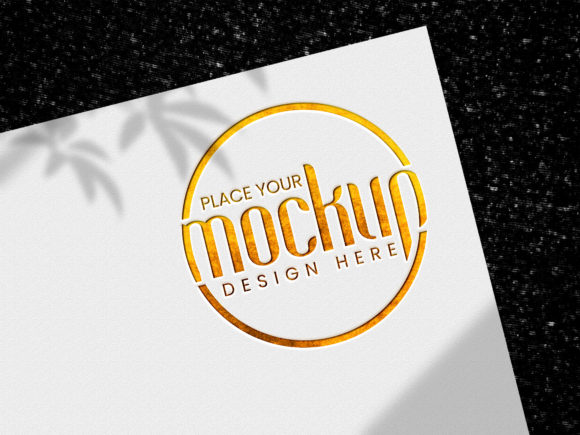
A realistic letterpress logo mockup is a pre-designed, layered digital file—typically created in Adobe Photoshop or similar software—that allows a user to place their logo artwork into a scene that mimics the appearance of letterpress printing. Letterpress is a centuries-old relief printing technique where a raised, inked plate is pressed into paper, leaving a slight indentation around the printed area. The result is a tactile impression that combines visual contrast with a subtle physical texture.
Digital mockups replicate this effect by using high-resolution photography, smart object layers, and lighting and shadow simulations to produce a convincing, three-dimensional look. The user simply inserts their logo into a designated layer, and the mockup automatically applies the depth, ink texture, paper grain, and environmental lighting that characterize real letterpress output. The outcome is a presentation asset that feels real—something that can be placed on a business card, a stationery set, a packaging box, or a premium brochure.
These mockups are distinct from flat logo presentations or generic product shots. They emphasize materiality, craft, and attention to detail, which are qualities that resonate deeply with clients and audiences seeking authenticity in branding.
The Resurgence of Texture in a Digital-First World
The growing popularity of realistic letterpress logo mockups is not an isolated trend. It reflects a larger cultural and commercial shift toward tactile aesthetics and sensory branding. After more than a decade of minimalist, flat, and ultra-digital design language—driven by screen interfaces and social media—consumers and professionals alike are gravitating toward visuals that suggest substance, permanence, and human touch.
This shift shows up across multiple industries:
- Packaging design increasingly uses textured paper, foil stamping, and embossing to create unboxing experiences that feel premium.
- Stationery and print collateral are making a quiet comeback as tools for differentiation in a sea of email signatures and PDFs.
- Brand identity presentations now routinely include mockups that simulate real-world usage, because clients want to see how a logo will appear on a business card, a tote bag, or a product label.
- E-commerce and direct-to-consumer brands use tactile imagery in product photography to convey quality before a customer ever holds the item.
Realistic letterpress logo mockups sit at the intersection of these forces. They allow a brand to communicate tradition meets precision—a combination that appeals to luxury segments, artisanal businesses, and modern professionals who value both heritage and clarity. By using a mockup that shows a logo pressed into fine paper, you signal that the brand cares about the details that matter, even when the interaction begins on a screen.
Why Professionals and Entrepreneurs Are Paying Attention
The attention around realistic letterpress logo mockups stems from several converging needs that have become prominent in the current creative and business environment:
1. Evolving Client Expectations
Clients today are more visually literate than ever. They have seen thousands of logos, presentations, and brand decks. A simple digital file—a logo on a white background—no longer impresses or builds confidence. What does impress is a contextualized presentation that shows how the logo behaves in the physical world. A realistic letterpress mockup transforms a logo from an abstract graphic into a tangible asset. It answers the client's unspoken question: How will this look and feel in real life?
For designers and agencies, using such mockups has become a competitive differentiator. It demonstrates a higher level of service, foresight, and production awareness. Freelancers who present their work in a letterpress mockup often report that clients perceive the work as more finished and valuable—which can justify premium pricing.
2. The Need for Emotional Connection in Branding
Brands are under constant pressure to forge emotional bonds with their audiences in an environment where attention is scarce. Tactile imagery has been shown to evoke feelings of warmth, trust, and quality. A realistic letterpress mockup taps into this by presenting the logo as something that has been made, not just designed. The slight impression, the paper texture, the subtle shadow—all of these cues signal effort and care.
For entrepreneurs building a new brand, this kind of presentation can be used across pitch decks, social media, website hero sections, and even product packaging mockups. It creates a consistent message: This brand values craftsmanship.
3. Changing Workflows in Remote and Hybrid Environments
With more creative work happening remotely, the ability to produce high-fidelity visualizations without a physical studio or print setup is essential. Realistic letterpress mockups bridge the gap between digital design and physical reality. They allow a designer in one city to show a client in another city exactly how a logo will look once printed—without the cost, time, or logistics of producing a physical proof.
This capability aligns with the broader industry trend toward faster iteration cycles and reduced material waste. Instead of printing multiple rounds of samples, teams can refine the visual presentation digitally and only go to print when the design is fully approved. This is smarter, more sustainable, and more efficient.
Practical Applications Across Creative and Business Contexts
The versatility of realistic letterpress logo mockups makes them useful in a wide range of scenarios. Here are some practical examples of how different professionals leverage them:
Brand Identity Design
When presenting a new brand identity, a designer can use a letterpress mockup to show the primary logo on a business card, a letterhead, and an envelope. This creates a cohesive brand system that feels complete and ready for production. It also helps clients understand how the logo will perform at small sizes and on different substrates.
Packaging and Product Design
For a product that ships in a box or a bag, a letterpress mockup can visualize the logo on the packaging itself. This is especially powerful for small-batch, artisanal, or premium goods where the packaging is an extension of the product experience. A letterpress logo on a kraft box immediately communicates natural, handcrafted values.
Pitch Decks and Proposals
Entrepreneurs pitching to investors or partners can use a realistic letterpress logo mockup on the cover of a presentation or in a brand overview slide. It adds a layer of polish that suggests the startup is serious about its visual identity and attention to detail. This can positively influence how the brand is perceived by potential stakeholders.
Social Media Content
Instagram, Pinterest, and LinkedIn are visual platforms where texture-rich imagery performs well. A photo-like mockup of a letterpress logo can be used as a standalone post, a background for a quote, or part of a carousel showing the brand's design process. It stands out among flat graphics and stock photos, driving engagement and brand recall.
The Craft Behind the Digital Tool
Not all letterpress mockups are created equal. The most effective ones share several characteristics that make them realistic and usable:
- High-resolution photography: The base image is a real photograph of paper or cardstock, providing authentic texture and lighting.
- Accurate depth and shadow simulation: The indentation effect is rendered with subtle highlights and shadows that match the physics of actual debossing.
- Smart object layers: These allow the user to insert their artwork without needing to manually adjust lighting, perspective, or distortion.
- Color and ink behavior: Good mockups account for how ink spreads, absorbs, and reflects on different paper types, which varies significantly from screen rendering.
- Customizable backgrounds and environments: Many mockups offer multiple angles, lighting conditions, and paper colors to suit different brand aesthetics.
Choosing a high-quality mockup means investing in tools that save time while delivering a result that feels genuine. Free or poorly made mockups often have unrealistic lighting, flat shadows, or low resolution—which can undermine the very impression you are trying to create.
Integrating Realistic Letterpress Mockups into Modern Workflows
Adopting realistic letterpress logo mockups does not require a complete overhaul of your existing process. It can be a seamless addition to a standard design workflow:
- Design your logo as you normally would, ensuring it works in black, white, and color, and that it scales properly.
- Select a suitable mockup that matches the intended application—business card, packaging, stationery, etc.
- Insert your logo into the smart object layer, making any necessary adjustments to size, position, or color.
- Render and review the output, paying attention to how the texture and lighting interact with your design.
- Present the result to stakeholders, either as part of a brand deck, a proposal, or a social media post.
This process takes minutes, not hours, and can be repeated across multiple mockups to create a diverse set of visual assets. For teams, standardizing on a few trusted mockup sources ensures consistent quality across projects.
From a business perspective, the return on investment is clear. A small upfront cost for a premium mockup can reduce the number of physical samples needed, accelerate approval cycles, and increase the perceived value of the design work. For freelancers, this can translate into higher rates and more referrals.
Looking Ahead
As digital tools continue to evolve, the line between virtual presentation and physical reality will only blur further. Realistic letterpress logo mockups represent a mature intersection of photography, 3D simulation, and design craft. They are not a gimmick; they are a response to a genuine need for authenticity in a world saturated with flat, frictionless digital imagery.
While the underlying technology will improve—with more dynamic lighting, real-time rendering, and perhaps even augmented reality layers—the fundamental value of these mockups will remain constant: they help people imagine a brand in the real world, where texture, weight, and quality matter. In a marketplace where first impressions often happen on a screen, being able to show rather than tell what a brand feels like is a powerful advantage.
For any professional involved in brand creation—whether you are designing for a client, launching your own venture, or refining an established identity—adding a realistic letterpress logo mockup to your toolkit is a small change with outsized impact. It respects the heritage of print while embracing the efficiency of digital. More importantly, it reminds us that even in a digital age, the most memorable brands are those that feel real.