Burundi vs Greece: Two Flags Compared
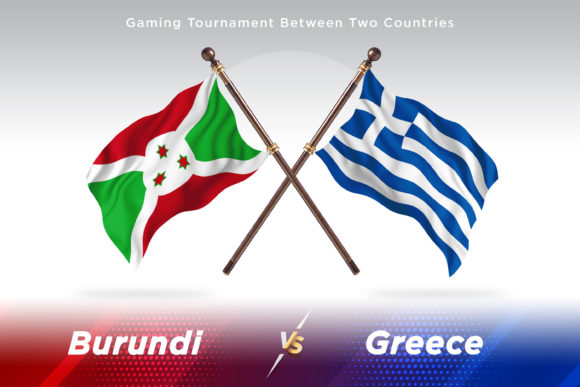
The flags of Burundi and Greece may appear worlds apart, yet a side‑by‑side comparison reveals distinct narratives of history, identity, and purpose. Burundi’s flag uses a white saltire that divides red and green quarters, with three red stars placed in the center. Greece’s flag features nine alternating blue and white horizontal stripes, with a white cross on a blue canton. Understanding these designs goes beyond mere curiosity—different audiences find value in these details for very different reasons.
Why a Flag Comparison Matters
At first glance, comparing two national flags might seem like a niche interest. Yet the exercise touches on design principles, cultural storytelling, and practical applications. A graphic designer studying color palettes might note the bold red‑green contrast in Burundi’s flag versus the serene blue‑white harmony of Greece’s. A teacher preparing a geography lesson can use the symbols to spark discussions about national unity, religion, or colonial history. Even a small business owner who sources materials from both countries may want to understand the flags when creating respectful marketing materials for international audiences. The comparison is not about deciding which flag is “better,” but about recognizing how visual identity serves different goals.
For Designers and Creative Professionals
Creative professionals often dissect flags for their aesthetic and symbolic content. Burundi’s flag is relatively rare in design references—the white saltire (a diagonal cross) is less common than horizontal or vertical stripes, making it a fresh layout for a logo or background pattern. The three red stars represent the national motto “Unity, Work, Progress,” and the red and green fields evoke the people’s struggle for independence and hope. A designer looking for a bold, symmetrical yet angular shape might borrow the saltire structure for a modern brand identity.
Greece’s flag, by contrast, is one of the most recognized in the world. Its blue and white stripes are synonymous with the sea, sky, and light associated with Greek islands. The cross in the canton signals Orthodox Christianity and the nation’s historical resilience. A creator working on a travel brand, a Mediterranean restaurant menu, or a map illustration can easily draw from these elements. The flag’s high recognition also means that using it cues instant geographic and emotional associations—something a designer must handle carefully to avoid cliché.
Example for creators: A freelance illustrator creating a “flags of the world” poster might choose to highlight Burundi’s central stars for their symmetry and Greece’s stripes for their rhythm, turning both into repeatable decorative patterns. The choice depends on whether the client wants a minimalist style (Greece) or a vibrant, less‑common motif (Burundi).
For Educators and Students
In a classroom setting, comparing Burundi and Greece flags opens doors to history, geography, and civics. A teacher might explain that Burundi’s flag—first adopted at independence in 1962 and revised later—uses green for hope, red for suffering during the struggle for freedom, and stars for the ethnic groups (Hutu, Tutsi, and Twa) that form the nation. That story leads naturally to discussions about post‑colonial statehood, ethnic relations, and African identity.
Greece’s flag, with its nine stripes, is often said to represent the nine syllables of the Greek revolutionary motto “Eleutheria i Thanatos” (Freedom or Death). Others interpret the stripes as the waves of the Aegean Sea. The cross is a clear reference to the Greek Orthodox faith and its role in preserving national identity under Ottoman rule. A student researching nationalism can compare how both flags use color and geometry to encode resilience.
Example for educators: In a comparative politics unit, teachers can assign a flag analysis project where students describe how Burundi’s flag reflects a multi‑ethnic nation‑state while Greece’s flag emphasizes religious and revolutionary heritage. Such exercises help students see flags not as static symbols but as living texts that evolve with their countries.
For Entrepreneurs and Business Owners
Business owners who operate internationally or serve diverse communities may encounter flags in branding, event planning, or cross‑border communication. Knowing the difference between Burundi’s and Greece’s flags can prevent cultural missteps. For instance, using the Greek flag on a product package might signal quality or heritage for olive oil or feta cheese, but using it for a generic “Mediterranean” theme could feel inauthentic if the product has no real connection to Greece.
Burundi’s flag is less globally recognized, so a business importing coffee from Burundi might incorporate the flag’s colors (red, green, white) into packaging to emphasize origin and authenticity. The three stars could be used as a subtle brand mark for “unity” within a company’s own mission statement. Conversely, a travel agency organizing tours to Greece might place the flag on brochures to instantly evoke the destination. The flag becomes a visual shortcut for trust and familiarity.
Example for marketers: A social media manager for an e‑commerce store that sells international treats could run a “Flag of the Month” series. One month features Burundi (coffee, tea) with a post explaining the flag’s meaning; the next month features Greece (olives, honey). This builds cultural awareness and connects product stories to visual symbols.
For Travelers and Hobbyists
Travelers who pay attention to flags gain a deeper appreciation of the countries they visit. Spotting the Burundi flag at an embassy or airport might prompt a traveler to learn a few words in Kirundi or understand the country’s recent history. The flag’s red and green fields appear vibrant against the African landscape. In Greece, the flag is everywhere—from tourist shops to government buildings. A traveler who knows that the cross represents the Orthodox Church may understand why many island churches share the same blue and white color scheme.
For hobbyists who collect flag pins or create travel scrapbooks, the visual differences are practical. Burundi’s flag has a unique diagonal cross shape that stands out in a collection dominated by stripes and tricolors. Greece’s flag is easy to recognize but also easy to confuse with other striped flags (like Thailand’s or the Czech Republic’s) if not paying attention to the canton. Collectors often appreciate the stories behind each flag, making the comparison a way to organize their interests.
Example for hobbyists: A flag enthusiast might start a blog or Instagram account comparing two flags each week. Burundi versus Greece offers a rich contrast in complexity: one has a simple geometric cross and stars, the other has repetitive stripes and a canton. This kind of content appeals to fellow geeks and also to casual learners who like visual trivia.
Evaluating Ease of Use and Flexibility
When using flags in digital or print media, practical factors come into play. The Greece flag’s nine stripes can be tedious to recreate accurately at small sizes—at thumbnail scale, the stripes may blend into a solid blue‑white mix. The cross remains clear, but the stripe count often gets simplified. Burundi’s flag, with its large areas of red and green and the central white saltire, retains its identity even when scaled way down. The three stars might become tiny dots, but the overall pattern stays recognizable.
For print production, the pure blue and white of Greece are easy to match (standard CMYK blues and white paper). Burundi’s red and green have specific shades (red is often a deep crimson, green a forest green) that may require pantone matching to avoid looking too bright or too dull. A graphic artist working on a national day campaign would need to verify official color codes for Burundi to maintain accuracy, whereas Greece’s colors are widely available in design libraries.
Example for professionals: A web developer designing a page about world flags should ensure that the Greece flag image loads with preserved detail for the stripes (using SVG or high‑resolution PNG). For Burundi, an SVG is also preferable to keep the saltire lines crisp. Knowing these constraints helps deliver a polished product.
Matching the Flags to Your Own Goals
Readers should consider what they need from a flag comparison. Are you choosing a flag for a school project? Greece’s flag might be easier to draw by hand because of the simple block of blue and white stripes plus cross. Burundi’s flag requires a bit more precision for the diagonal lines and star arrangement, but it offers a chance to explain a less‑known nation.
If you are a marketer looking for an eye‑catching symbol, the cross and stripes of Greece are instantly recognizable, which can be an advantage or a cliché. Burundi’s stars and saltire feel fresh and can spark curiosity—exactly what a brand aiming for authenticity might want.
If you are a hobbyist or educator, the value lies in the stories each flag tells. Both flags are relatively modern in their current forms (Burundi’s final version from 1982, Greece’s from 1978), so they also reflect contemporary nation‑building. Neither flag is “better” for everyone, but each serves a specific purpose depending on context.
Long‑Term Relevance and Cultural Impact
Flags evolve, but both Burundi and Greece have maintained their core designs for decades. The Greece flag is deeply tied to the nation’s identity and appears in the country’s tourism branding, sports events, and diaspora communities. Its blue and white have even influenced fashion and interior design trends. Burundi’s flag, while less globally popular, is a powerful symbol within the country and the broader East African region. As Burundi continues to develop, its flag will likely remain a stable emblem of national pride.
For researchers studying vexillology (the study of flags), the comparison between a saltire‑based flag and a stripe‑and‑canton flag illustrates two different approaches to flag design from different continents and historical experiences. This kind of contrast helps explain why flags look the way they do—and what they say about the people who created them.
Whether you are looking for design inspiration, teaching material, or a way to connect with a country, understanding the flags of Burundi and Greece gives you more than just trivia. It gives you a lens to see how two distinct nations have chosen to represent their past, present, and future in just a few colors and shapes.