Burundi vs Equatorial Guinea Flags: A Deep Dive into Symbolism, History, and National Identity
Flags are far more than decorative cloth. They are compact visual statements of a nation's history, struggles, values, and aspirations. For the casual observer, the flags of Burundi and Equatorial Guinea might seem like just two more African banners with vibrant colors and emblems. But look a little closer, and each flag tells a powerful story—one of colonial legacy, revolutionary change, natural wealth, and cultural pride.
This article explores both flags in detail, compares their designs and meanings, and unpacks how they reflect the unique journeys of these two African nations. Whether you are a student, a traveler, or simply curious about world symbols, this guide will give you a richer understanding of the flags of Burundi and Equatorial Guinea.
Understanding the Flag of Burundi
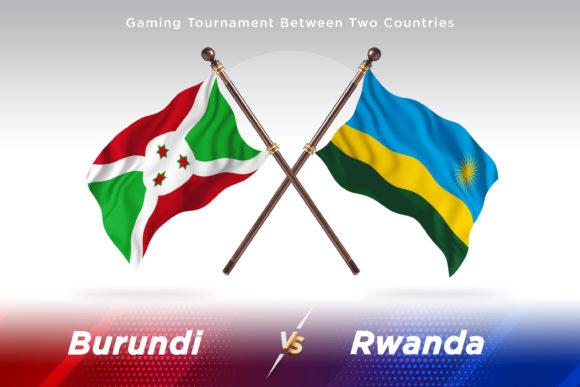
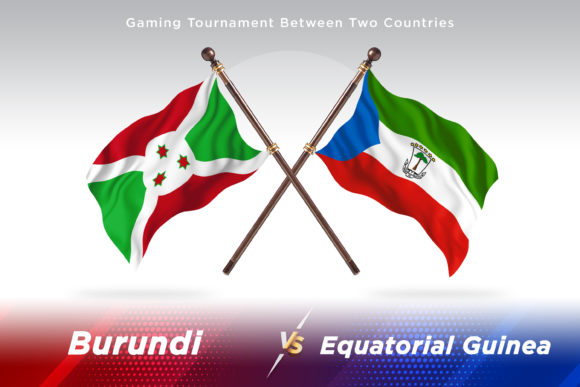
The flag of Burundi is one of the most distinctive in Africa, featuring a bold white saltire (an X-shaped cross) that divides the field into four triangular sections. The top and bottom triangles are red, while the left and right triangles are green. At the very center sits a white circle containing three red six-pointed stars outlined in green.
Adopted on March 28, 1967, the flag replaced an earlier version used briefly after independence from Belgium in 1962. The current design was chosen to better reflect the country's national motto and core values.
Symbolism of Burundi's Flag
- Red triangles: Represent the struggle for independence and the blood shed by martyrs. Red also symbolizes the nation's revolutionary spirit.
- Green triangles: Stand for hope for the future, agricultural abundance, and the lush landscapes of the "Land of a Thousand Hills."
- White saltire (X-shaped cross): Symbolizes peace among the people. White is a universal color of purity and reconciliation.
- Three red six-pointed stars: These are the most iconic element. They represent the three main ethnic groups of Burundi: the Hutu, the Tutsi, and the Twa (Pygmy). The stars also stand for the three words of the national motto: "Ubumwe, Ibikorwa, Amajambere" — Unity, Work, Progress.
The placement of the stars inside a white circle reinforces the idea of unity within peace. The six-pointed star shape is relatively rare in national flags, making Burundi's design instantly recognizable.
Historical Context of Burundi's Flag
Burundi's flag has evolved with its politics. The original post-independence flag featured a karyenda (a traditional drum) in the center, symbolizing the monarchy. When the monarchy was overthrown in 1966, the drum was removed and replaced with the three stars to represent the new republic's ideals of equality and collective effort. This change reflects a deeper shift from a feudal kingdom to a modern state seeking national cohesion after years of colonial division.
Today, the flag is flown with pride at government buildings, schools, and during national celebrations like Independence Day (July 1) and the annual Unity Day (February 5).
Understanding the Flag of Equatorial Guinea
The flag of Equatorial Guinea is equally rich in meaning. It features three horizontal stripes: green on top, white in the middle, and red on the bottom. On the hoist side (left), there is a blue vertical triangle. At the center of the white stripe sits the national coat of arms, which includes a silk-cotton tree, six gold stars, and a banner bearing the national motto.
Adopted on August 21, 1979, the flag was revised after the overthrow of dictator Francisco Macías Nguema. The current version restored the original design from independence in 1968, with minor modifications to the coat of arms.
Symbolism of Equatorial Guinea's Flag
- Green stripe: Represents the country's dense tropical forests, agricultural wealth (especially cocoa and coffee), and its natural resources. Green is also a pan-African color linked to hope and vitality.
- White stripe: Symbolizes peace, transparency, and the desire for harmony among the nation's people and with neighboring countries.
- Red stripe: Honors the blood sacrificed during the struggle for independence from Spain and the fight for freedom. Red is a reminder of the cost of sovereignty.
- Blue triangle: Represents the Atlantic Ocean and the country's island territories, including Bioko (where the capital Malabo is located) and Annobón. The blue also symbolizes the maritime connection that links the mainland region (Río Muni) to the islands.
- Coat of arms – Silk-cotton tree: Also known as the ceiba tree, it is a national symbol that represents the point where the first treaty between the local people and Spanish colonizers was signed. It stands for rootedness, resilience, and the foundation of the nation.
- Six gold stars: Represent the mainland region and the five offshore islands: Bioko, Annobón, Corisco, Elobey Grande, and Elobey Chico. They signify unity across the country's geography.
- National motto on the banner: "Unidad, Paz, Justicia" — Unity, Peace, Justice. These three ideals are the pillars of the republic.
Historical Context of Equatorial Guinea's Flag
Equatorial Guinea gained independence from Spain in 1968. The first flag was designed by the country's first president, Francisco Macías Nguema, but his regime quickly became repressive. Under his rule, the flag was altered to remove the coat of arms and replace it with a different emblem. After his overthrow in 1979, the original flag was restored with the coat of arms adjusted to reflect the new government's commitment to democracy and unity.
The flag today is a symbol of the country's complex path—from Spanish colonialism to a brutal dictatorship and now to a fragile democratic transition. It is flown during national holidays like Independence Day (October 12) and Armed Forces Day (August 3).
Side-by-Side Comparison: Burundi vs Equatorial Guinea Flags
At first glance, the two flags share little in common visually. But a deeper comparison reveals interesting parallels and contrasts.
| Feature | Burundi | Equatorial Guinea |
|---|---|---|
| Color palette | Red, green, white | Green, white, red, blue |
| Geometric layout | Saltire (X) dividing four triangles | Horizontal stripes with a hoist triangle |
| Central emblem | Three red six-pointed stars in a white circle | Coat of arms with a silk-cotton tree and six stars |
| Pan-African colors? | Partially (red, green, but no black or gold) | Yes (green, red, plus blue and white) |
| Main symbolic theme | Ethnic unity and national progress | Geographic unity and independence struggle |
| Number of stars | 3 (ethnic groups) | 6 (mainland + five islands) |
| Common misunderstanding | Stars are sometimes mistaken for representing political parties | Tree is often thought to be a baobab, not a silk-cotton tree |
Common Misunderstandings About Both Flags
One of the most frequent misconceptions about the Burundi flag is that the three stars represent the country's three administrative provinces. In reality, they symbolize the three ethnic groups. Another assumption is that the red triangles represent violence or war, but the official meaning ties them to the independence struggle and sacrifice.
For the Equatorial Guinea flag, many people mistake the silk-cotton tree for a baobab tree or a palm tree. The silk-cotton tree (Ceiba pentandra) is specifically chosen for its historical role as a meeting place and treaty site. Additionally, the six stars are sometimes thought to represent six political regions, when they actually represent one mainland and five islands.
Cultural and Political Significance in Modern Context
Both flags play active roles in their countries' national life beyond mere decoration.
Burundi's Flag in Daily Life
In Burundi, the flag is a fixture at public ceremonies, school assemblies, and sporting events. It appears on government documents, official vehicles, and even on some currency. The three stars are so iconic that they are often used as a shorthand symbol for the nation in digital media and logos. During the country's periodic political transitions, the flag has served as a rallying point for unity—especially important given Burundi's history of ethnic conflict.
Equatorial Guinea's Flag in Daily Life
Equatorial Guinea's flag is similarly ubiquitous. The blue triangle is a proud reminder of the country's island identity, which sets it apart from many other African nations. The coat of arms is used on passports, official seals, and in embassies abroad. For the diaspora community, the flag is a powerful link to home, especially during celebrations like the National Day of Culture.
Practical Relevance for Travelers, Students, and Enthusiasts
If you are traveling to either country, knowing what the flag represents can deepen your appreciation of local culture. In Burundi, showing respect for the flag is taken seriously—improper handling can be seen as disrespectful. In Equatorial Guinea, the flag is often displayed alongside the president's portrait and the national crest in public offices.
For students of vexillology (the study of flags), both flags offer excellent case studies in how post-colonial nations use design to forge a unified identity. Burundi's flag uses the saltire motif, which is more common in European flags (like Scotland and Norway), adapted to an African context. Equatorial Guinea's flag uses the Spanish tricolor tradition (horizontal stripes) but adds a unique triangle and coat of arms.
For content creators, writers, and educators, these flags are rich with material for lessons on symbolism, African history, and national identity. Comparing them side by side can illustrate how geography, ethnicity, and colonial history shape visual culture.
Similarities That Go Beyond First Impressions
Despite their visual differences, the flags of Burundi and Equatorial Guinea share some deeper themes:
- Post-colonial identity: Both flags were created or significantly revised after independence, reflecting the need to break from colonial symbols and build a new national image.
- Emphasis on unity: Both flags use stars to represent unity across different groups—ethnic in Burundi's case, geographic in Equatorial Guinea's case.
- Use of red for sacrifice: Both flags include red to honor those who fought for independence.
- Central emblematic device: Both flags put a meaningful symbol in the center (stars in a circle / coat of arms), making them emblematic flags rather than purely geometric ones.
- National motto alignment: Both flags embody their national mottos: Burundi's "Unity, Work, Progress" and Equatorial Guinea's "Unity, Peace, Justice."
Conclusion: More Than Just Colors and Shapes
Comparing the Burundi vs Equatorial Guinea flag is not just an exercise in visual trivia. It is a window into how two African nations have used design to express their unique histories, struggles, and hopes. Burundi's flag speaks to ethnic reconciliation and agricultural identity. Equatorial Guinea's flag tells a story of colonial struggle, island geography, and national unity.
Whether you are studying flags for academic purposes, planning a trip, or simply satisfying your curiosity, understanding these symbols enriches your global perspective. The next time you see these flags waving at an international event or in a textbook, you will know the layers of meaning packed into every stripe, star, and shade of color.
Flags are not static. They evolve as nations evolve. And in the case of both Burundi and Equatorial Guinea, their flags remain powerful reminders that even the smallest nations carry big stories—woven into cloth for all to see.